

We’ve all been there, grabbing for a plastic bag at the store because it’s convenient. But if we take a moment to think about the consequences, it’s clear that the “convenience” comes at a heavy cost. We, as humans, love our convenience and tend to fall into habits that, while easy, can be pretty destructive to our planet. The thing is, once that plastic bag is no longer useful, it doesn’t just disappear. It ends up in landfills, forests, oceans, or even stuck in the trees in our backyards, where it takes hundreds of years to break down and in the meantime, it’s damaging our environment.
The Environmental Impact of Single-Use Plastic Bags

Landfills and Pollution
Plastic bags are everywhere. The average American uses approximately 500 plastic bags each year, and only 1% of these bags are recycled. The rest are either incinerated, sent to landfilled, or worse in our forest, water sources & backyards, where they can take up to 1,000 years to break down.
So what is happens during that time? Toxic chemicals leach into the soil and water, causing contamination that lasts for centuries. These chemicals include phthalates, bisphenol A (BPA), and styrene and they can disrupt ecosystems by harming plant growth, reducing soil fertility, and poisoning wildlife. For humans, prolonged exposure to these chemicals can cause serious health issues, including infertility, endocrine disruption, developmental delays in children, and an increased risk of cancer. In children, the effects can be even more dangerous, potentially leading to developmental and behavioral problems. The environment also suffers, as poisoned soil and water make it harder for crops to grow and wildlife to thrive.

Butterfly Effect
The butterfly effect is the concept that a small action can trigger a chain of events with much larger consequences. When it comes to plastic pollution, this isn’t hypothetical - it’s happening right now - every day, often starting with something as simple as a single plastic bag.
When a plastic bag is discarded into the world it is then carried by the wind into many places like a field, ocean, forest, or tree. Over time, wildlife mistake it for food. Fish, birds, deer, livestock…. truly any animal or insect you can think of - can and will ingest the plastic, which can block their digestive systems, poison them, or slowly starve them to death. As individual animals get sick or die, populations will begin to decline.
That loss doesn’t happen in isolation. When prey animals begin to disappear, predators struggle to find food. Predator populations will decline, and move closer to human communities in search of resources. At the same time, animals that aren’t naturally controlled begin to overpopulate. This imbalance damages ecosystems that have taken thousands of years to stabilize.
As habitats weaken, the effects spread to plants and agriculture. Fewer insects and animals mean less pollination and poorer soil health. Crops become harder to grow, yields decrease, and farmers are forced to use more land, water, and chemicals just to produce the same amount of food. This drives up food prices and makes food systems more fragile, especially in communities already struggling with access to affordable groceries.
The damage always circles back to us. Declining wildlife, polluted soil and water, and disrupted food chains mean fewer resources, higher costs, and greater risks to human health. What began as a “harmless” piece of plastic used out of convenience and laziness becomes part of a much larger problem - one that affects what we eat, how much we pay for it, and the stability of the ecosystems we rely on to survive..

Microplastics and Their Impact
We’ve all heard about microplastics, but what are they exactly, and why should we be worried? As plastic breaks down, it turns into tiny particles known as microplastics. These minuscule pieces of plastic find their way into our waterways, soil, and air, ultimately contaminating the food chain and water supply. Fish, birds, and even humans are ingesting these particles, with harmful effects that are only beginning to be understood.
Microplastics can affect every part of the body, particularly lung function, immune response, and reproductive health. Research has found microplastic particles in human placental tissue, raising concerns about the potential for toxicity that may harm babies before they are even born. These particles can accumulate in the body over time, leading to health problems that could affect individuals across generations. Studies have shown that microplastics can be absorbed through our skin and through ingestion. So, while a plastic bag may seem harmless in the moment, the ramifications for both the environment and our health are far reaching.
The Health Effects of Single-Use Plastic

Chemical Leaching
Plastic bags are made from a variety of chemicals, including BPA and phthalates, that are known to leach into food when plastic bags are exposed to heat or sunlight. These chemicals disrupt the endocrine system, which is responsible for regulating hormones in the body. For women, this can contribute to problems like PCOS, endometriosis, and infertility. For men, exposure to these chemicals can lead to reduced sperm count and lower testosterone levels.
And for children well, the potential effects of toxic chemicals on their developing bodies can be devastating, leading to growth issues, learning disabilities, and behavioral problems like hyperactivity. Babies are especially vulnerable, with studies showing that exposure to BPA and phthalates during pregnancy can result in fetal development issues and lead to lifelong health complications.
Harmful Chemicals in Food
Single use plastic bags often come in contact with food, especially when carrying items like fresh produce. When you store food in plastic bags, those chemicals can transfer into the food, making it toxic for consumption. One study showed that BPA in plastic food containers could contaminate the food it holds, leading to increased risk of cancer, diabetes, and obesity. The effect on children's health is even worse, as their bodies are more vulnerable to the toxins found in plastics.
Additionally, plastic bags are often used to store food in places with varying temperatures, such as in hot cars or warm kitchens. This exposure can cause the plastic to break down faster, releasing more harmful chemicals into the food. Over time, this can increase the risk of autoimmune diseases, cancers, and reproductive health disorders in both men and women, particularly for those who regularly consume food stored in plastic containers.
The Pros of Single-Use Plastics
It’s important to acknowledge why single-use plastic bags became so common in the first place. In many places, they’re free, lightweight, and readily available, making them the easiest option for consumers. For retailers, they’re inexpensive, easy to store, and quick to distribute. Plastic bags are also often reused at home for tasks like lining bathroom trash cans, cleaning litter boxes, picking up pet waste, or holding car trash. For some purchases - such as raw meat or items that might leak - they can feel especially convenient.
But convenience does not equal necessity.
While plastic bags offer short term ease, their long term environmental and health costs far outweigh these benefits. What’s used for minutes often remains in the environment for centuries. The same bag that once carried groceries can end up clogging waterways, harming wildlife, or breaking down into microplastics that enter our food and water.
The good news is that nearly all of the common uses for plastic bags already have affordable, low-impact alternatives. Small trash cans can be used without liners or paired with paper bags. Litter boxes and pet waste can be managed with compostable bags, newspaper, or paper-based liners. Car trash can be collected in washable containers or reusable fabric bins. For groceries and leak-prone items, reusable bags designed with washable, waterproof linings provide a durable and safer option.
Switching away from single use plastics doesn’t require perfection or expensive products. It’s about choosing reusable or biodegradable options whenever possible and recognizing that convenience should never come at the expense of our environment or health.
Are Reusable Bags Really That Much Better?
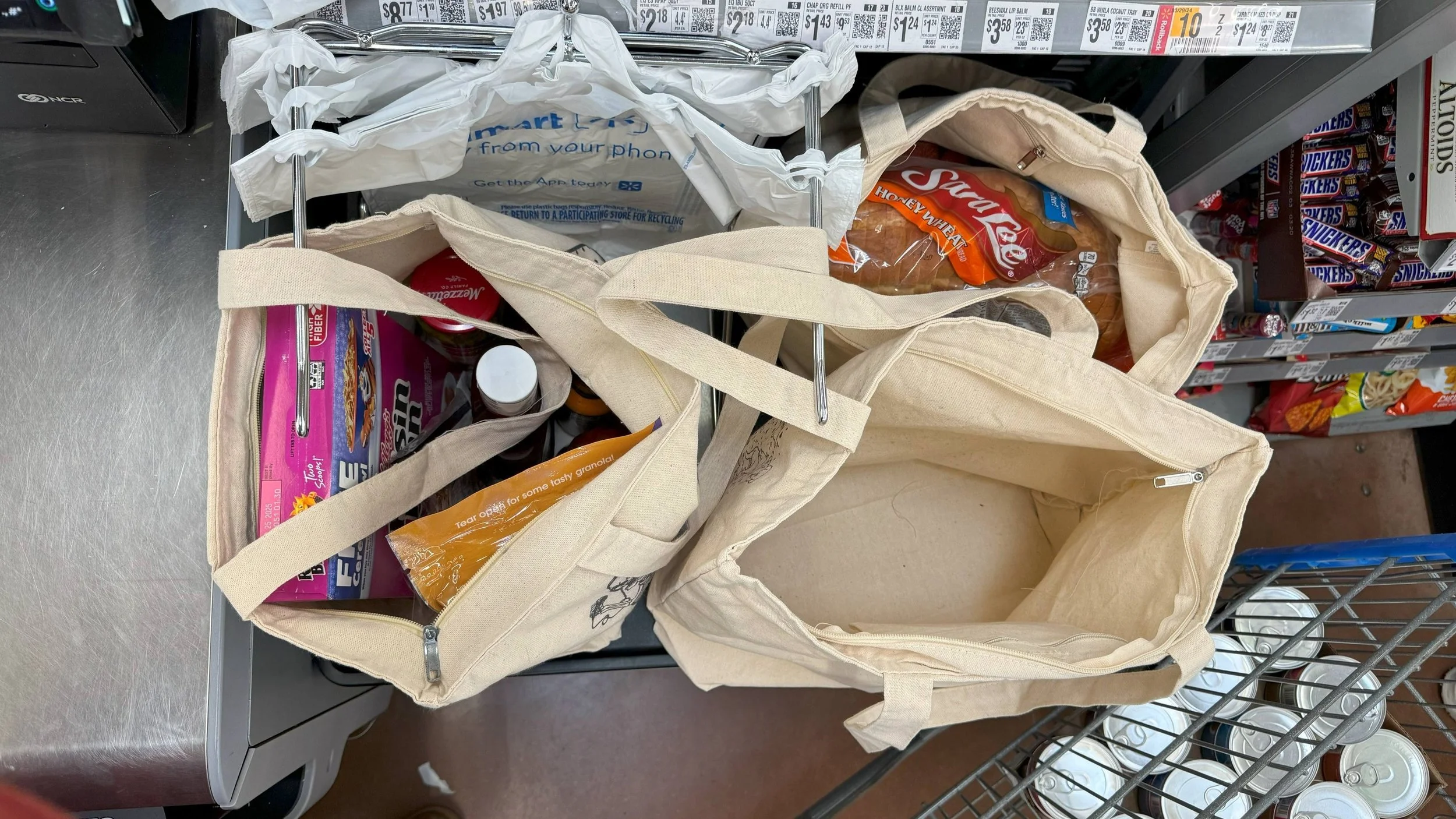
Absolutely, but not because they’re perfect. Reusable bags still require energy and resources to produce. The difference is how long they last, what they are made of and how much waste they prevent over time.
A single reusable bag can be used hundreds, even thousands, of times. A plastic bag, on the other hand, is often used for only for a extremely small window of time before becoming waste that damages the environment for centuries. If you choose today to avoided using plastic bags for just one year, that could mean roughly 500 fewer plastic bags polluting the planet. By choosing reusable bags, you could dramatically reduce the amount of plastic entering landfills, waterways, and ecosystems.
Unlike plastic bags, fabric or woven reusable bags don’t leach harmful chemicals into food when exposed to heat or sunlight. Over time, this simple switch can reduce everyday chemical exposure for you and your family.
The impact may feel small in the moment, but small choices repeated over time create meaningful change.
Eliminating plastic from your life entirely is much harder in practice than in theory. But this isn’t about being perfect or never using plastic again - it’s about being mindful of our actions and choosing habits that help the planet instead of harming it. It’s about making a better choice when you can. And when millions of people make that same choice, the collective impact is powerful, leading to cleaner environments, healthier ecosystems, and a planet with a better chance to recover.
